


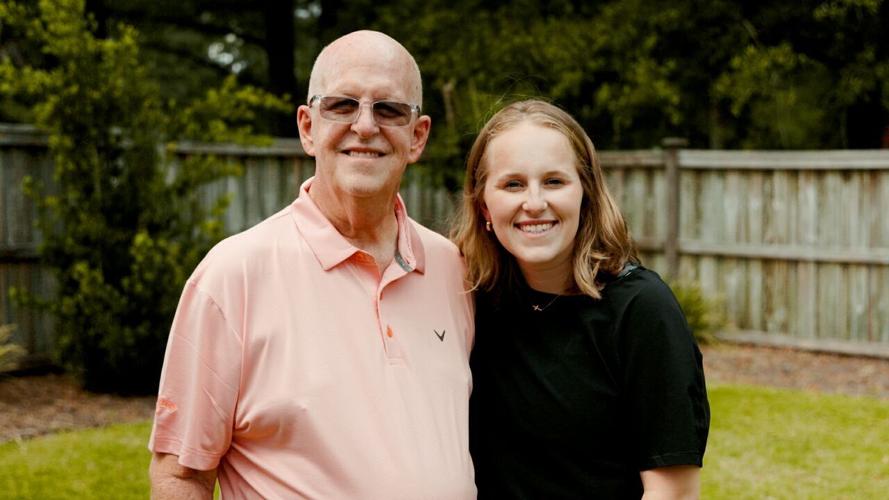
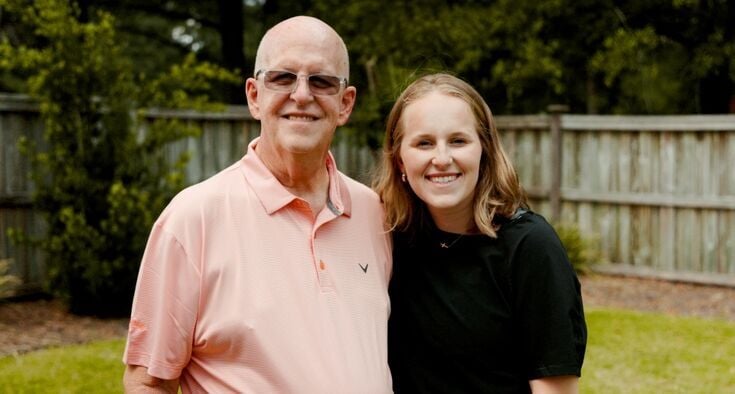
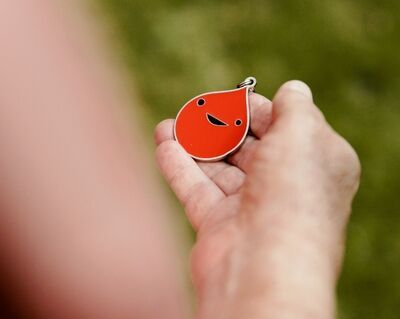
Robert Hines will always remember Christmas 2025 at his daughter Abby’s house in Winston-Salem. After the adults exchanged gifts and the grandkids had been lavished with presents, Abby had one more surprise package for her dad. It held a key chain illustrated with a blood droplet.
“I’m going to be giving you a lot of blood,” she explained.
“What do you mean?” Robert hadn’t caught on yet.
Abby was going to be her dad’s stem cell transplant donor. Her mom, Mandy, burst out crying at the extraordinary gift.
Only a few months earlier, Robert, 67, had been diagnosed with acute myeloid leukemia (AML), a cancer in the blood and bone marrow. He needed new stem cells to have a hope of a full recovery. Following an international search, Abby had turned out to be the ideal donor, matching all 12 criteria.
People are also reading…
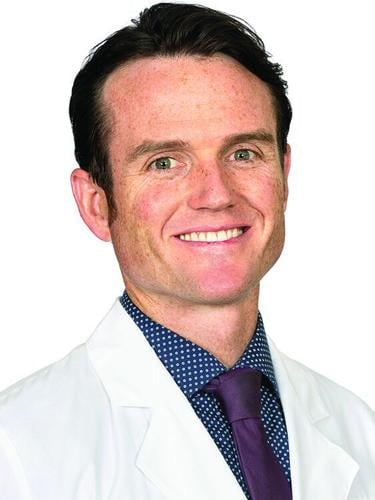
It was the latest step in their journey with Dr. James Dugan, a hematology/oncology specialist at Novant Health Cancer Institute - Forsyth. AML can be a rapid killer for people over 60 if left untreated. It was up to Dugan, the physician lead for the transplant and cellular therapy department, to steer Hines and his family through.
‘Nobody is prepared for this diagnosis’
Robert had been healthy all his life. The Wilmington retiree had never needed a hospital stay and describes himself as the kind of guy who could “play golf in 95-degree heat and come home and mow the yard.” He and Mandy had enjoyed a Mediterranean cruise last August from Crete to Barcelona.
Following a dental appointment in the fall, though, Robert couldn’t shake his fatigue. When he was admitted to Novant Health New Hanover Regional Medical Center, he was struggling with dangerously low levels of everything he needed — platelets, white blood cells to fight infections, red blood cells, and hemoglobin to carry oxygen to the body. A bone marrow biopsy and other tests revealed his cancer diagnosis.
Everything happened so fast, shocking the family, including Robert and Mandy’s three sons. Abby drove to see her dad, crying much of the way. “You have these thoughts of, ‘What’s going to happen? Is this the last time I’m going to see him? My daughter’s not going to know him growing up.’” Mandy feared that after 30 years of marriage, she would be a widow in six months.
There was no time to lose. Robert was transported 240 miles by ambulance to Novant Health Forsyth Medical Center in Winston-Salem, where resources were more extensive to treat AML. Dugan said they needed to start treatment the next day. He compared Robert’s form of AML, known as de novo AML, to stepping on a landmine: “Nobody is prepared for this diagnosis,” he assured the family. “There’s nothing you did or didn’t do to get this.” About 22,700 Americans are diagnosed annually with AML.
It’s unclear how the cancer gets triggered. “The human blood system needs to replicate over the years to make the trillions of cells that populate your blood system,” Dugan explained. “All of the cells have to copy themselves. Then the copy has to make a copy. For reasons that we don't entirely understand in that copying process, the process can go haywire.”
Harvesting millions of stem cells
Robert would need targeted therapies to get him into remission from the cancer. But remission lasts only months with this form of AML. Robert’s stem cells would likely mutate again, which meant he would need an additional treatment after remission — a stem cell transplant.
And the stem cells needed to come from a donor, rather than using his own stem cells. (When the stem cells come from another donor, it’s known as an allogenic transplant.) The transplant would replace Robert’s damaged stem cells with new ones capable of evolving into healthy blood cells.
Dugan began treatment with a medical cocktail of venetoclax, gilteritinib and azacitidine. The technique differs from traditional chemotherapy. “We are shying away from those bigger chemotherapies because we can do better with these targeted therapies,” Dugan explained. “People are healthier going into their transplant. They're not so beat up by the time they get there."
Robert’s therapy over three months achieved a strong remission. In the meantime, the transplant team searched for a donor. They needed one who had compatible “human leukocyte antigens,” or HLA.
To understand this mouthful, think of antigens as substances that mark viruses and other troublemakers in the body. These marks help the immune system find and attack the intruders. The team needed to find a donor with a compatible HLA type so that Robert’s body would accept their stem cells and not have antigens marking them as invaders.
Everyone in the family did a DNA cheek swab to see if they would be a match. Abby had been cautioned that, as a mother, it was very unlikely her stem cells would work. Antigens produced during pregnancy typically reduce compatibility with relatives. Abby was so surprised when she got the call, she asked the transplant coordinator, “Did you mean to call one of my brothers?”
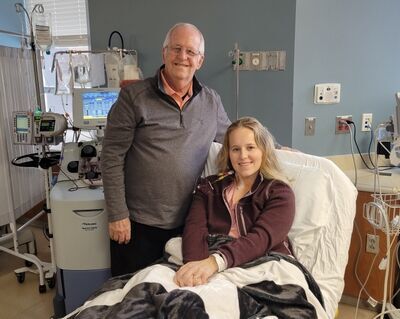
To harvest the cells, Abby took a growth hormone injection for five days to stimulate stem cell production. Once her count was sufficient, she was connected to a device that circulated her blood, separated out some stem cells, and returned the rest to Abby. She chatted with her parents and read during the eight-hour procedure. The team hoped to collect eight million stem cells. They got 13 million.
Robert received the life-giving gift through an IV on Feb. 18, 2026. The scene looked and sounded like a birthday party, with balloons and laughter. He left the hospital on March 4, his real birthday, and will continue to be closely monitored. At two years post-transplant, the chance of relapse is lower. At five years without a relapse, the disease is considered cured.
Abby praised the team at Novant Health for lessening her anxieties about the transplant procedure. “I would do it again a hundred times over, and encourage anybody who’s ever thought about stem cell donation to do it and give someone an opportunity at a second chance.”
For his part, Robert made it through the ordeal through a combination of optimism and faith. He encouraged those around him: “God's got his hands on the doctors, the nurses, the transporters, and I'm just his servant. So let’s go!”
He is also grateful to have Novant Health by his side. “I can’t say enough about the nurses, the doctor team over at Forsyth, their attention to detail, their love and care for the patients,” he said. “I was within days of going into organ failure and dying. Dr. Dugan and his team saved my life.”


